 EN
EN

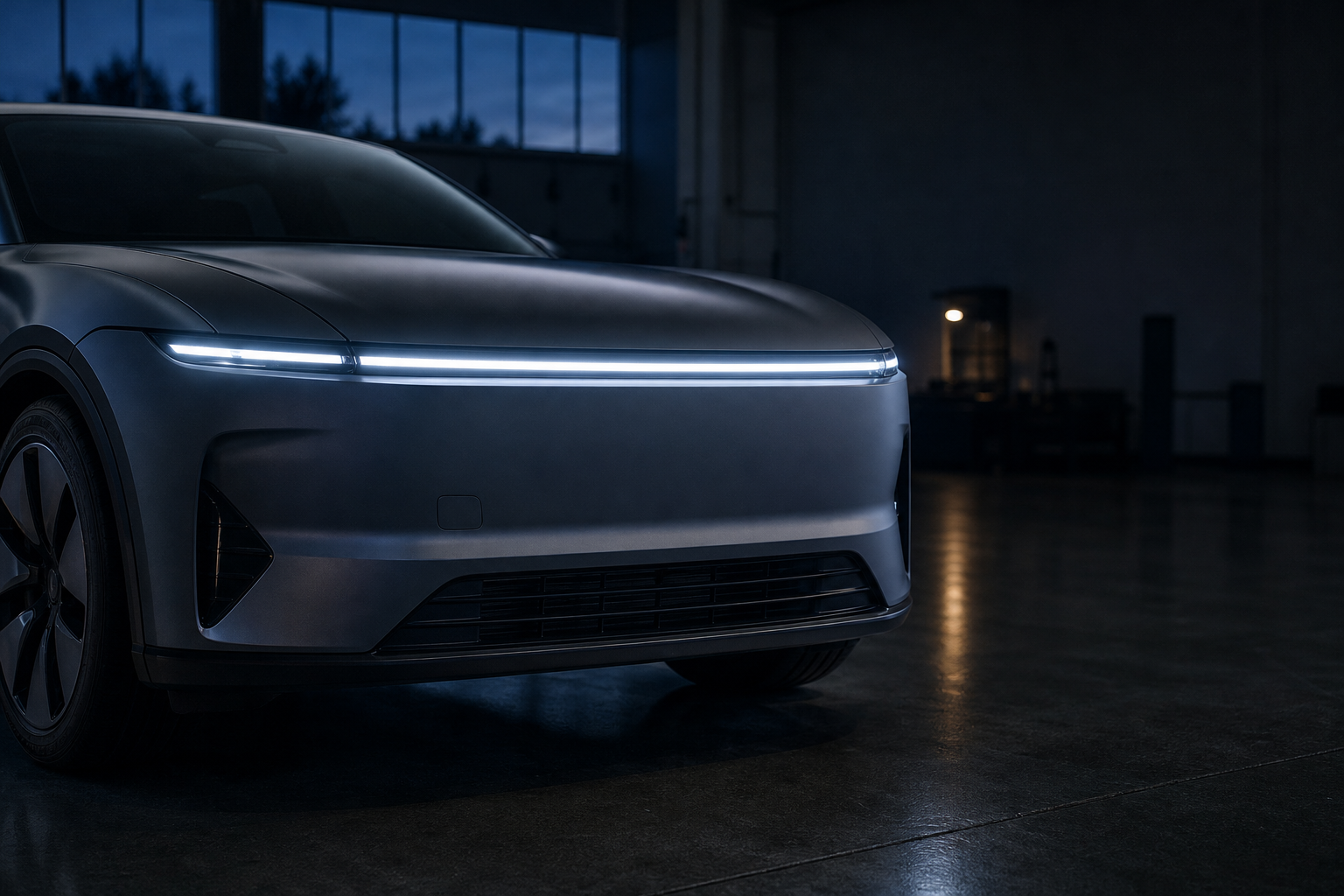
Ten years ago, the front of a car was easy to describe: a grille to cool the engine, headlights on either side, a bumper below. Electric cars broke that template. No engine means no big open grille, and the front ends of new EVs look nothing like the cars parked next to them at the lot. If you supply or stock exterior parts, this is worth understanding, because the parts list is quietly shifting. Here is what changed, and what it means for your inventory.
Why EVs Dropped the Grille
The grille had one job: pull air through the engine and radiator. An electric powertrain doesn't have that problem. No combustion engine, no big water-cooled radiator up front, so the face can close off — which also cuts drag and helps range.
But "no cooling" is not quite right. The battery, the motor and the power electronics all run hot, and they still need managed airflow. What most EVs did is move the cooling, not delete it. Look at the lower part of an EV front end and you will find slim intakes, air curtains beside the wheel arches, and battery-cooling ducts hiding where the grille used to be. The opening is smaller and more purposeful, not absent.
For parts people, that changes the SKU math. The classic car grille — a standalone panel that clips over the core support — is disappearing from new EV designs, and new shaped intakes and aero panels are appearing in its place. The category is not dead, it just moved.
What the EV Front End Looks Like Now
Three changes show up on almost every new EV, and all three touch parts you already sell.
The headlights got slim. Narrow light signatures replaced the big round units on many models, and some fronts use a light bar stretched across the top of the fascia. The lenses are smaller, but the optics inside are more complex — sealed LED modules, and on some models dynamic display elements. Small, sealed, and expensive to replace: the same logic that makes full headlight assemblies the smarter stock for any car, and our headlight assembly buying guide applies just as well to EV units.
The sensors moved into the fascia. ADAS cameras and radar are embedded in the bumper and around the badge area. The front bumper is no longer just a crash pad — it is a sensor carrier, and a replacement that sits a few millimeters off can throw the calibration out. Fitment on an EV bumper is a tighter job than on the car next to it.
The grille that remains is a styling piece. Where an opening survives — usually on the upper fascia — it is smaller, body-color or blacked-out, and decorative. The car grille buying guide still covers the fundamentals, but expect EV grille orders to be about looks and finish, not airflow.
Which EV Exterior Parts Are Still Moving
The grille went, but the rest of the body didn't. Crash damage doesn't check the powertrain before it happens, and EVs hit harder because the battery pack makes them several hundred pounds heavier than the car they replaced. What actually sells on EVs today:
- Front bumpers and aero panels. Low, wide parking lots plus a heavy car means bumper contact is a routine repair.
- Headlights. Slim sealed modules are high-cost replacements, and they break in the same low-speed impacts.
- Fenders, doors, mirrors. Standard crash and cosmetic work — mirrors matter more on EVs because the blind-spot camera lives inside them.
- Frunk lids. The front trunk is a body panel in a new shape. It dents, it cracks, and it needs the same kind of direct-replacement part as a hood.
And there is a demand curve coming. Early EVs are now hitting their fifth and seventh years — the age where accident and cosmetic repair volume climbs on any vehicle. The used-EV repair market is still small, but it is on the same path every other fleet took.
What It Means for Your Stocking Plan
Practically, four moves. Keep the ICE grille and bumper lines you run today — the combustion fleet is still the volume business and it will be for years. Where you grow is the front end of the EV models your customers already drive: start with bumpers, headlights, and frunk lids for two or three popular models rather than trying to cover the whole EV market at once.
Verify fitment by trim, not just model year. On EVs the low- and high-trim fronts differ — sensor packages, light signatures, body-color versus black fascias — and a part that fits "the 2024 model" may not fit the one in the bay. And remember the calibration step: any bumper or mirror you sell that carries a camera is a two-part job, part plus recalibration, which is information your repair-shop customers will respect you for knowing.
Tell us which EV models your customers drive and we will map the SKUs, fitment notes, and certification status that fit. Contact KEBEL to start that list.
FAQ
Do electric cars really have no grille?
No. They have no engine-cooling grille, but the battery, motor, and power electronics still need airflow, so most EVs keep slim lower intakes, air curtains, and battery-cooling ducts. What disappeared is the big open upper grille, not cooling itself.
Are EV bumpers and headlights different from regular car parts?
Yes, in three ways: they carry ADAS sensors and cameras, they are shaped as aerodynamic components, and the headlight units are slim sealed LED modules. Fitment is tighter (trim-level differences matter more), and any sensor-carrying part needs recalibration after replacement.
Should a distributor start stocking EV body parts now?
The early EV fleet is reaching five to seven years old, which is when repair volume historically starts climbing. The practical entry point is the front end — bumpers, headlights, frunk lids — for the two or three EV models your customers already drive, not the whole EV market.